Gameplay Loops
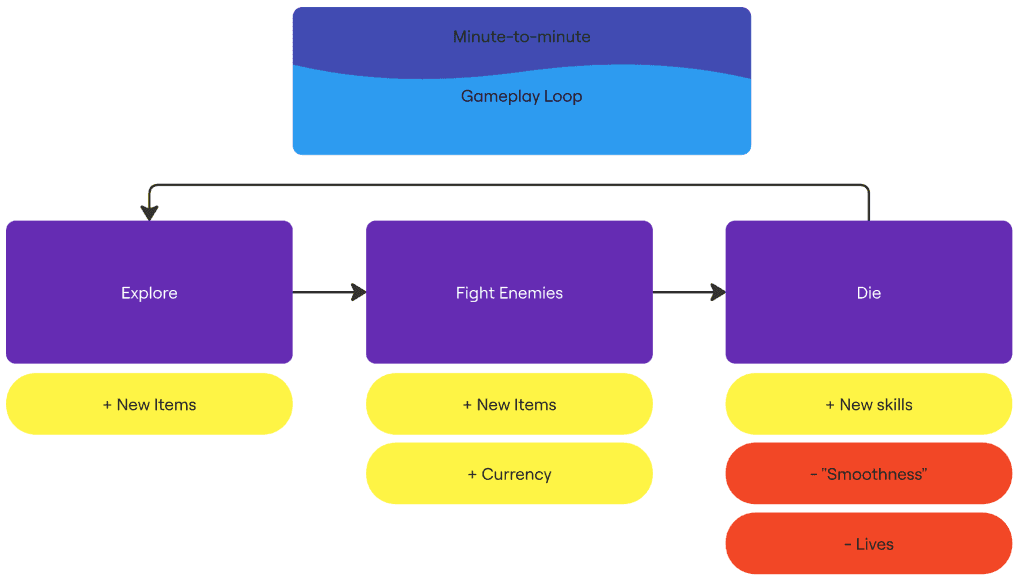
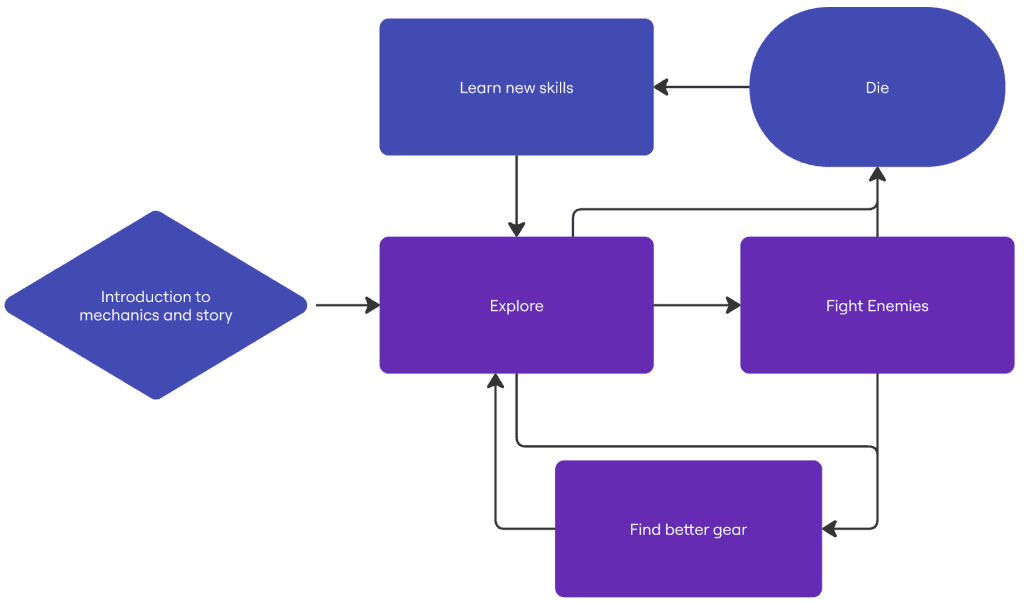
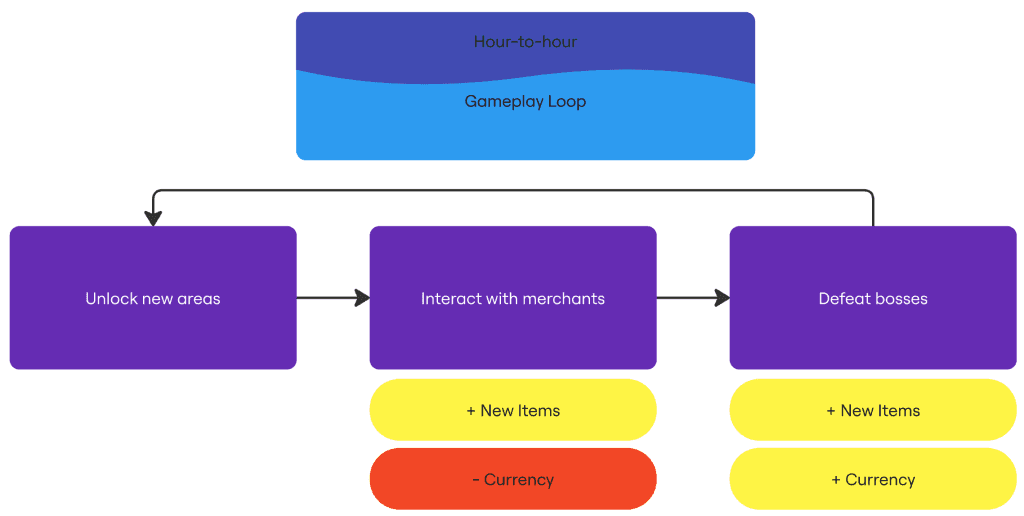
Core Gameplay Loop
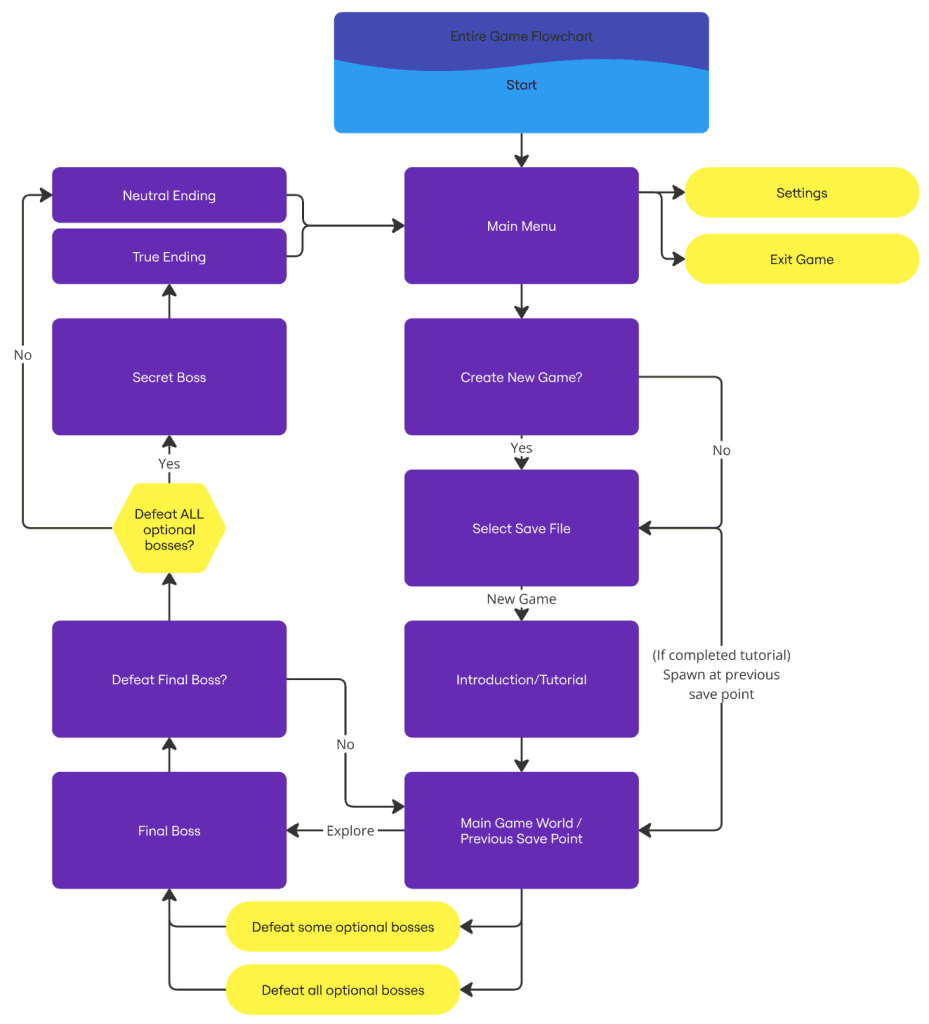
This section of my GDD focused on the players journey, how they would interact with
the game world at any given moment at different levels of depth and complexity
Art Direction
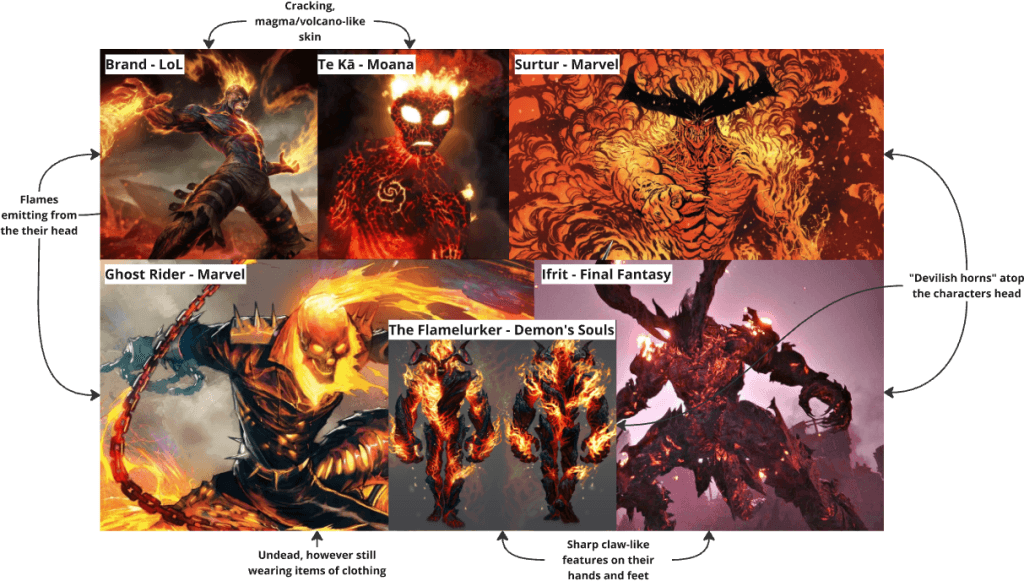
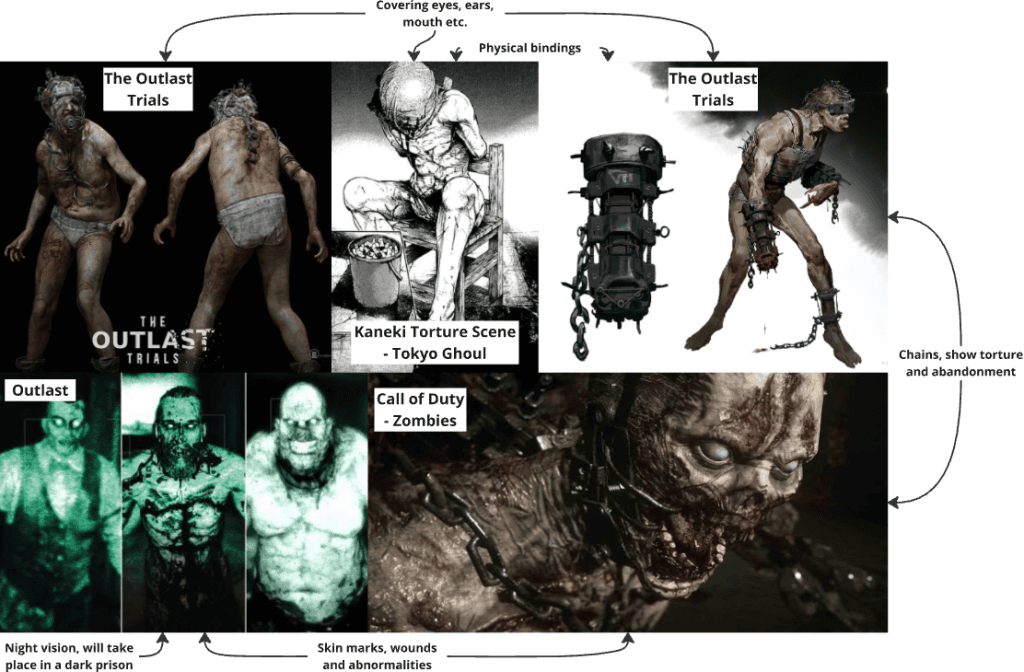
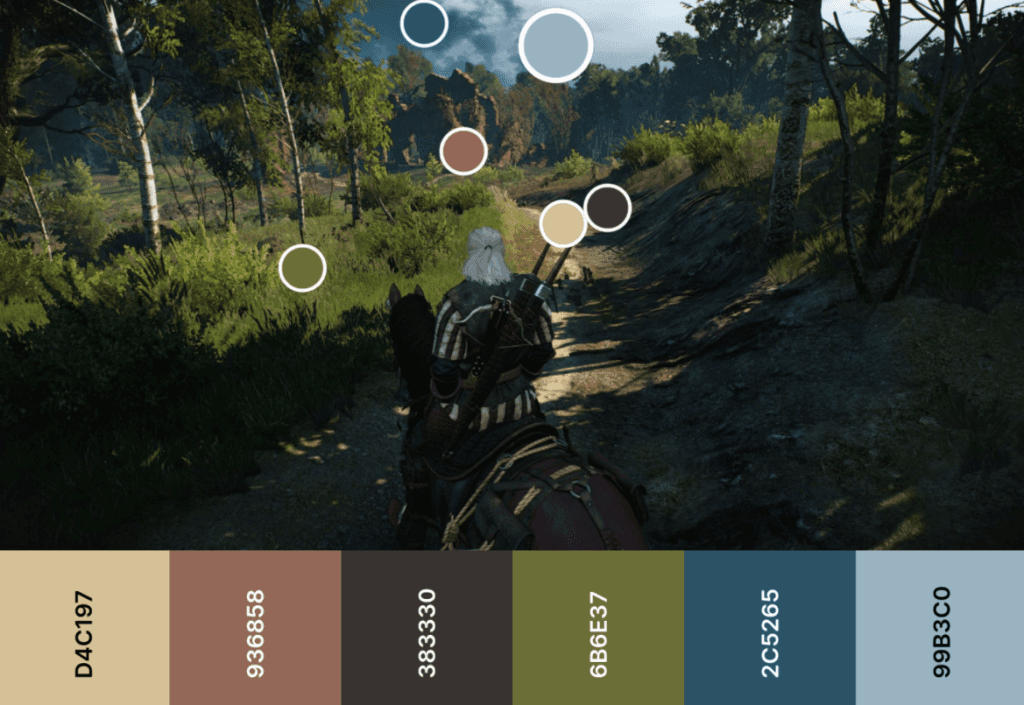
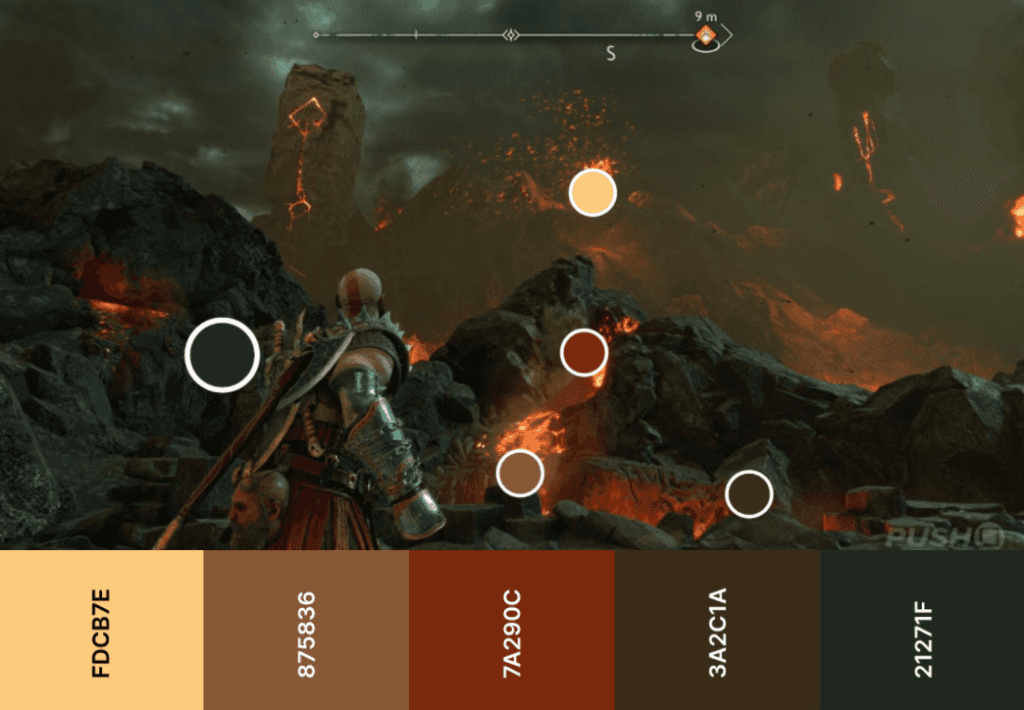
This section of my GDD focused on researching the art that I wanted to implement into my
game, creating mood boards and analysing them to see what aspects I wanted to
use in my own work.

Game Design
World Design
Narrative Design
2D Art
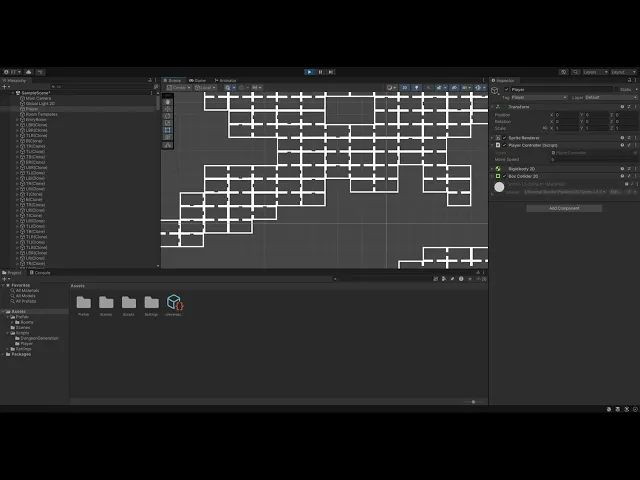
Procedurally Generated Dungeon
An essential part of this game and any rogue-like, as this was the key feature of the game
I spend most of my time on this. Fixing bugs and developing features throughout.
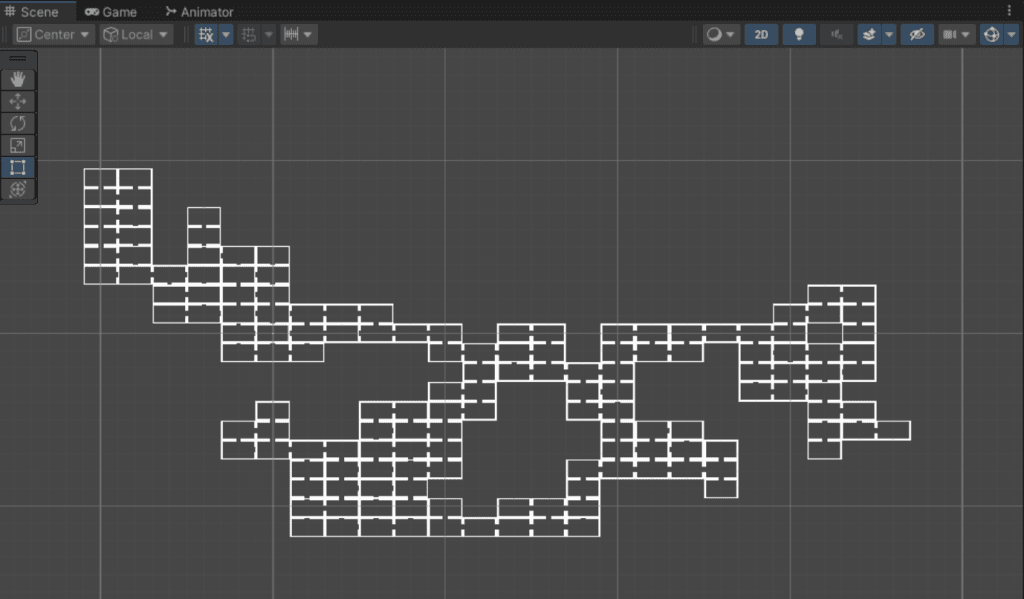
This early version of the dungeon was created using psuedo-code I found on the Binding
of Isaac Fandom Wiki and from analysis of the game 'Moonlighter'. While it was helpful to
creating an early prototype there were many bugs:
Rooms Instantiating on top of one another
Dungeons varied too widely in size
Rooms exits would lead to dead ends (The wall of another room)
After identifying and fixing these bugs, read more about how I fixed these bugs in my blog.
I implemented some more polish to the dungeon:
Room camera swapper
Doors closing upon player entrance
Doors opening upon room completion
Variable dungeon size (A public int that could be easily changed in the inspector)
Final room - Exit / Boss entrance room
Skill Tree
Also another part of roguelikes as a whole, being able to complete a run and upgrade the
player character to make them stronger for future runs.
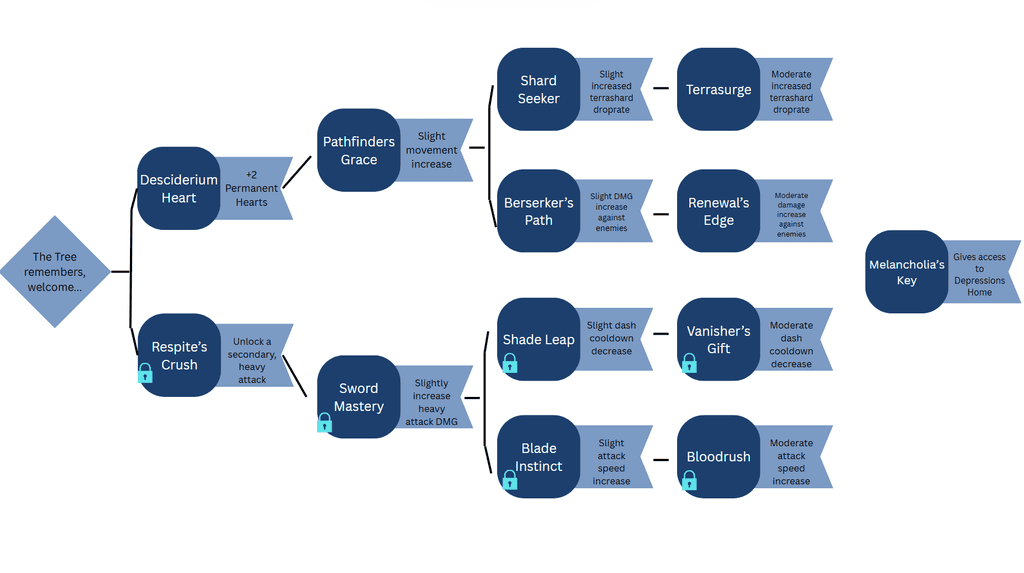
I created a mock up of the skill tree (on the left) to give myself an idea of the UI layout
and what needed to be developed on the coding end. Initially however, I focused:
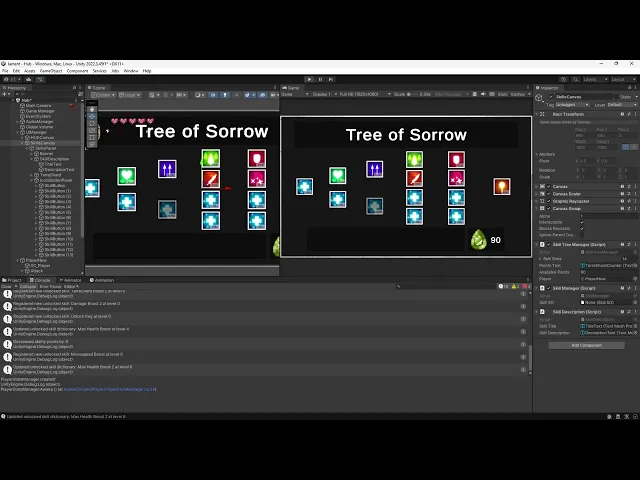
Players ability to spend 'points' in the skill tree
Skills depending on prerequisites
Skills staying unlocked from run to run
Although the skills didn't do anything yet, this was a crucial step to creating a framework
that would allow for easier implementation of working skills in the future, I accomplished
these things, using:
A player skills singleton, tracking the player's unlocked skills
A player manager, tracking player's 'Skill Points'
To make these skills effect the player, I created a method that would take the input of any
skill the player bought, and used a switch case to call a method that would call a method
in the player manager, which could also track player HP, Damage, Speed etc.
To read more about the development of the skill tree, visit my blog

Programming
Combat Design
UI Design
Project Details
Available to play on my itch